Why "No HEA" Can Still Be Worth Reading
A note for readers who want literary tragedy, emotional aftermath, and stories that witness a woman's life without promising a happy ending.
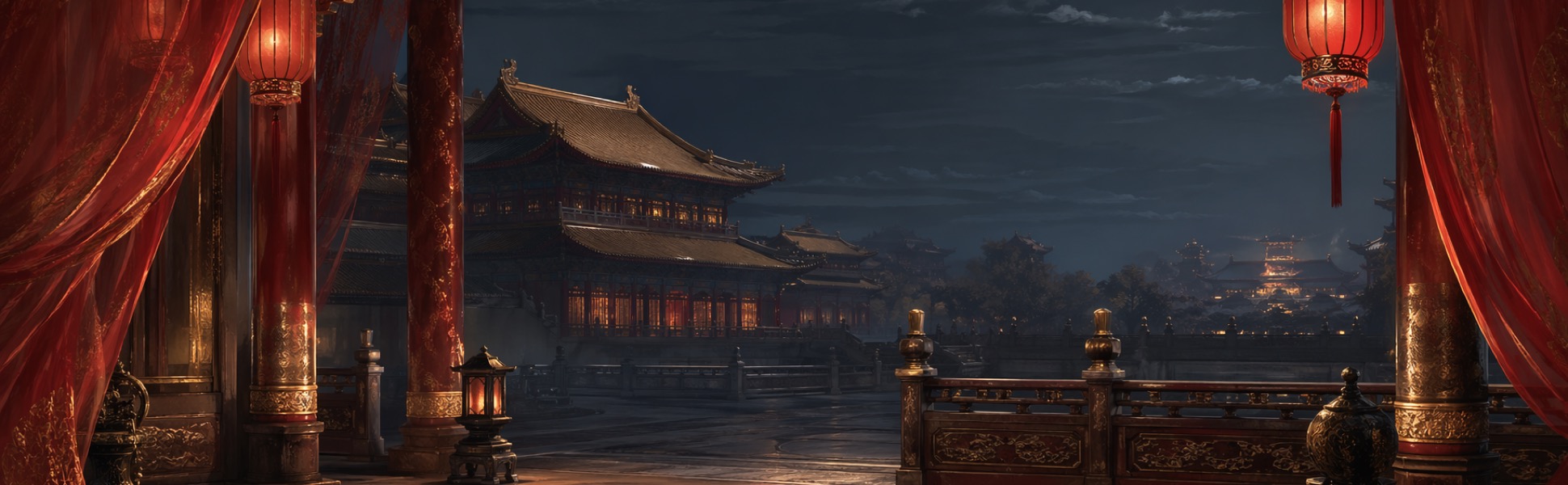
I’m going to be honest with you, because I think honesty is the only fair way to begin.
Most of my novels do not end happily. The phoenix crown is set down too late. The marriage that should have been a refuge becomes a long, quiet wound. The man finally understands the woman he loved — on the night she dies.
If those sentences made something tighten in your chest, you and I might be reading the same kind of book. If they made you want to close the tab, that is also useful information, and I would rather you know now than three chapters in.
This article is the door I want to keep open in front of every novel I publish. Walk through it, or don’t. Either choice is the right one.
The quiet contract of the happy ending
For a long time, romance has carried a private contract between writer and reader: no matter how dark the road, the ending will hold. Two characters will be alive, together, and choosing each other. The genre calls this HEA — Happily Ever After — and there is nothing wrong with it. People come to romance for many reasons, and one of the truest is that they need a guaranteed shore at the end of a hard day.
I love that contract. I just don’t write inside it.
The books I write sit a step to the left — closer to literary tragedy than to romance, even when their bones are romantic. They have weddings, lovers, and the kind of nights two people remember for the rest of their lives. They also have the palace, and the palace does not bend.
What “no HEA” actually means in my work
When I tell readers there is no guaranteed HEA in my novels, I am not saying nothing tender happens. There are coronation feasts. There are stolen afternoons under osmanthus trees. There are sentences spoken in the half-light that would mean forever in another novel.
What I am saying is that the world the women live in is heavier than their love.
In the imagined ancient China where my stories take place — the world of The Emperor’s Caged Bride, The Cloud Beside the Moon, and The Emperor’s Last Lie — love is a private weather event inside a public storm. Succession lines, dowager mothers, secondary consorts, family debts, political alliances. Every thread pulls. Two people can love each other very much and still lose. They often do.
That is not failure of imagination. That is the truth I am writing toward.
Why a tragedy can still be satisfying
When a tragic ending ruins me as a reader, I notice I almost always go straight to the next book by the same writer. The grief does not push me away. It pulls me closer. Something in the literary tragedy gives me what the happy ending could not. Let me try to name it.
Truth. The histories I read are full of empresses who died young, who were exiled, who were forgotten. Empress Chen of the Han — the most beloved girl in the empire as a child — was set aside at thirty, locked into Changmen Palace, and never seen by her husband again. Her name survives mostly because of a single poem written in despair. To tell stories like hers honestly, without flinching, without rescuing, is its own kind of beauty. A real ending, kept whole, is rarer than a happy one.
Dignity. My heroines are not saved. They save themselves, and sometimes they fail. The novel honors them by refusing to make their pain decorative or their endings tidy. They are not waiting on the page for a man to undo what has already been done.
Judgment. A tragedy lets the reader hold the men accountable. The Emperor who realized too late. The brother who chose silence. The system that asked a sixteen-year-old girl to be perfect, then punished her for trying. None of them get the soft landing of and he grew, and he was forgiven. The reader gets to close the book and decide for herself what was just.
Emotional aftermath. The best literary tragedies don’t end on the last page. They follow you for days. The grief is not a wound — it is a kind of company. Months after I finished writing The Cloud Beside the Moon, I would still catch myself thinking of Mianmian on her swing, or of Yueying standing over a medicine bowl with her hands not quite steady. The book had ended. They were still with me. That stay is what I am writing for.
Tragic satisfaction. This is the word I keep coming back to. Some readings leave you with something that is not happiness, but is also not regret. It is the feeling of having stood beside a real person through a real ending. You did not save her. She did not save you. But you witnessed her, and that mattered.
Not every story is an escape. Some are a witness.
I think this is the line I want to stand under.
Books can be many things. They can be company on a hard week. They can be a soft place to land. They can be a fantasy of being loved correctly the first time. I read books like those too, and I’m grateful for them.
But there is another kind of book — quieter, harder, slower — that does not exist to give you a better world. It exists to look honestly at this one. To look at a young woman in a phoenix crown and ask: what was actually done to her, and did anyone in her life ever truly see it?
That is the book I write.
If a tragedy can be told with care, then closing it is not an act of despair. It is an act of witness. You read so that someone, somewhere, finally sees the woman the story is about. The novel cannot save her. But you can refuse to look away.
That, to me, is what “no HEA” makes possible. Not pain for its own sake. Truth, dignity, judgment, aftermath, and the strange, lasting satisfaction of having been present for the whole of someone’s life — not just the rescue.
So — is this for you?
A few honest signals.
This is probably for you if: the feeling of Memoirs of a Geisha — beauty as labor, love that arrives wrong, an ending that closes quietly rather than triumphantly — has stayed with you across years; if Ruyi’s Royal Love in the Palace broke your heart and you sat with the broken pieces a while; if you reread the saddest chapter of The Story of Ming Lan on purpose; if you finish a novel and want to sit with it before opening the next one; if you would rather a story end correctly than end kindly.
(I want to be clear that I don’t claim Geisha’s setting — that is Japan, that is Arthur Golden’s; mine is an imagined ancient China. What I am borrowing is the emotional shape: women, institution, beauty, love-as-currency, an ending that stays.)
This is probably not for you if: you read primarily to feel safe; you bounce off books that don’t end with the couple together; you are looking for spice or banter as the main register. Those are good things to want. They are simply not what I am offering.
If the second list is you — please don’t buy my novels, and please don’t feel bad about it. I would much rather you find a writer whose ending will hold for you. There are wonderful ones out there.
If the first list is you — the door is open. Take your time.
What to do next
If this is the kind of writing you came here for, here are the gentlest ways to step further in:
- Start soft. Letters from the Inner Palace — my free story for subscribers. A single closed arc, given as a gift. The mood and voice of the novels, with an ending that closes a circle rather than leaves one open.
- Browse the bookshelf. The Emperor’s Caged Bride, The Cloud Beside the Moon, and The Emperor’s Last Lie are available in Kindle Unlimited. The first is a slow heartbreak; the second is a long revenge; the third is a doomed reunion built around the truth that arrives too late. Pick the pain that sounds most like yours.
- Read first, decide later. The Reader’s Guide lays out content notes, reading order, and which book to start with depending on what you came in looking for.
- Learn the palace before you enter. If you’re new to Chinese palace fiction, the Palace Titles Guide will save you a lot of confusion in chapter one.
Whichever door you pick, thank you for reading this far. That, on its own, is already the contract I care most about.
— Tia
A free story for new readers
The Empress He Could Not Keep — a complete short story
of empire, obsession, and the impossible return.
Yours when you join the reader list.