A Beginner's Guide to Chinese Palace Angst
A reader-friendly introduction to palace intrigue, consort ranks, clan duty, succession, and why Chinese palace tragedies hurt.
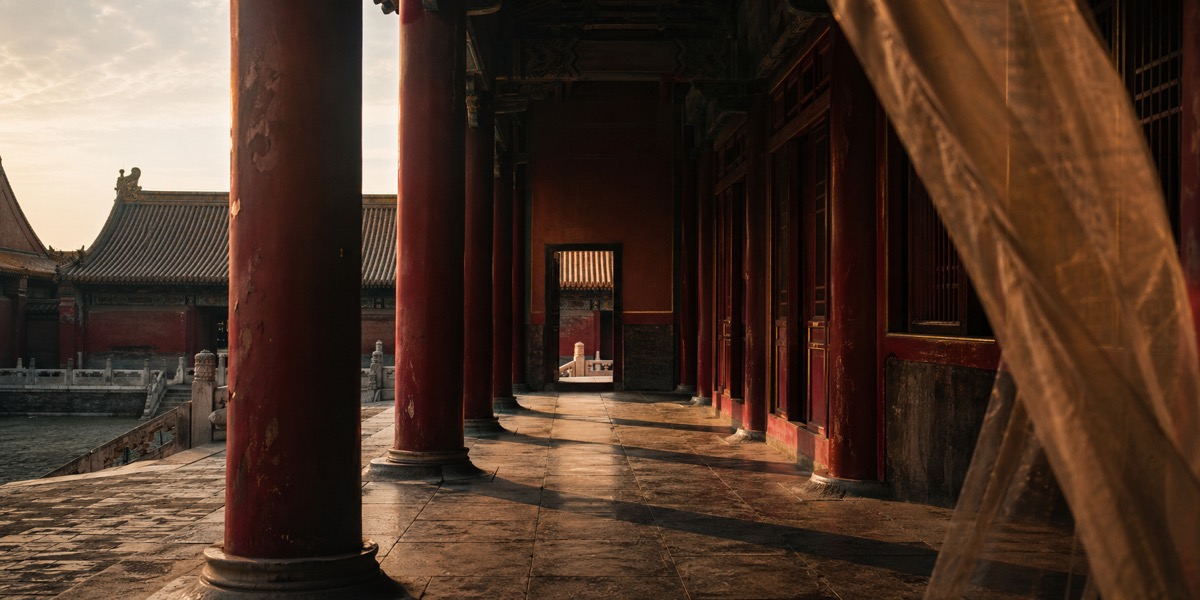
The first thing I would tell a new reader is not to panic over the titles. You can learn those as you go. The harder thing to learn is how small a private life becomes once it enters the palace. In an ordinary love story, a girl refusing a marriage might be the beginning of rebellion. In a palace story, the same refusal can threaten a clan, insult an Empress, disturb the succession, and still not save the girl. When I say Chinese palace angst, this is what I mean: beautiful rooms, formal manners, and people quietly realizing that no one inside the walls belongs only to herself.
This is not a history lesson. It is a reading map.
Start with the door, not the throne
Palace fiction can look intimidating because the setting is grand: emperors, ministers, heirs, titles, seals, banquets, dowagers, phoenix crowns. But the real drama often begins at a much smaller door.
At times it is literally a door: a woman waiting outside a hall while the person inside decides whether she is worth seeing. Elsewhere it is quieter than that, a physician taking a pulse or a name spoken in the bridal chamber that should have stayed buried.
In The Emperor’s Caged Bride, A-Jiao is sixteen when she is told she will marry the Crown Prince. Not simply marry him, either. She will become the second Crown Princess after her cousin A-Shuo dies. Before the romance can even begin, the wound is already there: A-Jiao is stepping into a dead woman’s place, in a marriage arranged because the Cui family still needs a daughter beside the heir.
I linger on those domestic details because they are where the pressure first shows. The throne may be far away, but the throne is already in the room.
The palace turns feelings into evidence
In a modern romance, longing may be private. In a palace story, longing leaves tracks.
Who did she look at during the banquet? Why did she cry into her wine? Why did he visit that courtyard and not another? Why did the Emperor ask after one prince’s case and not another? Why did a consort’s illness worsen after a visit from the people she loved most?
The palace is full of witnesses. Eunuchs, maids, physicians, matrons, wet nurses, guards, old servants who have seen too much and young servants who notice more than they should. A heroine does not get the luxury of merely feeling something. The feeling may be observed, reported, twisted, punished, or used as proof.
This is why A-Jiao’s love for Prince Ning cannot remain a sad little memory from girlhood. In a palace, even an old attachment can become something other people read, fear, and act upon.
If this is your first time with a palace novel, here is the thing to keep in mind: emotion is plot. Not because everyone is dramatic, but because the system makes emotion usable.
How titles change the scene
You do not need to memorize every rank before you start reading. But you do need to understand that “consort” is not a vague word for mistress.
A Crown Princess is the principal wife of the heir. An Empress is the principal wife of the Emperor. A Secondary Consort is lower than the principal wife but still formally ranked, with servants, rooms, dignity, and danger. A Liangdi is lower again, but not invisible. These are not decorations. They decide who kneels, who manages the household, whose child is more legitimate, and whose humiliation is considered acceptable.
This matters deeply in The Cloud Beside the Moon. Yueying was supposed to become Crown Princess. Instead, the Crown Prince chooses Qin Yunnong, and Yueying enters the Eastern Palace as Secondary Consort. On paper, she still has rank. In her own bones, she knows she has been pushed down from the seat her family expected her to occupy.
I keep the titles in the prose even when they look a little formal in English, because they tell you what the room permits before anyone has to say it out loud.
For the full rank ladder, keep the Palace Titles Guide open while you read. It exists because I know the first few chapters can feel like walking into a court ceremony halfway through.
The first cage is often the family
One common mistake is to imagine the heroine becomes trapped only after the palace gates close. In these stories, the decision has often been made long before she reaches the gate.
A-Jiao does not enter the Eastern Palace because she dreams of power. She enters because among the legitimate daughters of the Cui family, she is the one left. Her mother may pity her. Her aunt may protect her. Neither pity nor protection changes the fact that the family needs her body in that marriage.
Yueying carries a different version of the same burden. She is the granddaughter of a powerful chancellor. When she loses the Crown Princess seat to Qin Yunnong, the injury is not only romantic or personal. It is social. Everyone can see the daughter of a great family standing below a woman whose birth should not have outranked hers.
This is why palace heroines can seem proud, stubborn, or cold. Pride may be the last thing they own outright. Once family, rank, and marriage have taken everything else, pride becomes a way of saying: I still know who I am, even if this place keeps renaming me.
Pregnancy is never only happiness
I write mothers with tenderness. I also write the fear around them, because in palace fiction even the possibility of a child changes the map.
This is one of the biggest differences between palace fiction and an ordinary romance. A pregnancy is intimate, but it is also public information. It can change how servants speak, how rivals calculate, how a family hopes, and how the court imagines the future.
That does not mean the child is unloved. It means love has to exist in a room where everyone else is counting inheritance, rank, and possible heirs.
I keep coming back to that contradiction because it is one of the genre’s cruelest truths. The most private bond in the world becomes something the palace can measure.
Watch the women, not only the men
The Emperor’s commands matter. So do the Crown Prince’s visits, and the memorials ministers send in from the outer court.
But the daily intelligence of a palace story usually belongs to women.
The women notice who came late to morning respects, and which maid has suddenly grown too bold. A question about a pulse record may stay in the mind for months. So does a gift that arrives too generously, or an apology that has been staged for the wrong audience.
One of the reasons I write so much about women together is that friendship changes the temperature of a palace story. It gives a heroine somewhere to place her tenderness. It also gives the palace one more thing to notice.
No swords. No armies. Just women trying to read the room before the room reads them first.
Why the endings hurt
The endings hurt because palace stories keep accounts.
By the final chapters, too much has usually happened for one apology, one confession, or one late tenderness to set the world right again. A marriage can contain love and still be ruined by the way that love arrived. Rank can be won at the price of the self that once wanted it. And sometimes the truth does come out — just not while it can still save anyone.
For that reason, I do not think of these books as “sad romance” so much as palace tragedy. The question is not only whether two people love each other. The question is what the palace has trained them to do with love once they have it.
People use love as leverage. They mistake possession for devotion. They protect the wrong thing until the right thing is gone. Every now and then someone sees clearly for one breath, then chooses pride, rank, fear, or the safer lie anyway.
If you need the ending to make the pain safe, my books may not be the right place to begin. I say that without judgment. But if you are drawn to stories where the wound is allowed to remain a wound, you may understand the satisfaction I am chasing.
I wrote more about that reading contract in Why “No HEA” Can Still Be Worth Reading.
Where to begin
If you want the cleanest first step into my palace tragedies, start by deciding what kind of ache you are in the mood for. I know that sounds like an odd way to recommend books, but with this corner of fiction it is more useful than asking which one is “lighter.”
Choose The Emperor’s Caged Bride if you like a tighter, more intimate tragedy: a forced marriage, a dead first wife whose shadow fills every room, a first love the heroine is asked to set aside, and a young woman slowly learning that being useful to everyone else may cost her the right to be seen as herself. It is the better starting point if you want the palace story to close around one woman quickly.
Choose The Cloud Beside the Moon if you want the long burn: a demoted bride, a beloved Crown Princess above her, friendships that feel like refuge, and a heroine whose pride has nowhere safe to go. This one has more years, more women, and a colder emotional temperature.
Choose The Emperor’s Last Lie if you want the hidden-truth version of palace tragedy: a woman pulled back into the imperial harem after her family’s fall, a morally complex Emperor who loved, ruined, and protected her, and a final revelation that arrives too late to repair the life they missed.
None of the books asks you to memorize a dynasty before you begin. Read for the rooms first. Notice who is allowed to speak, who must smile, who controls the door, and whose child changes the air. The titles will settle once you have lived with them for a few chapters.
What to do next
If this is your first visit to Tia Shan’s palace fiction, begin with the Reader’s Guide for content notes and reading order. Then browse the books and choose between slow heartbreak, a colder long-burn palace tragedy, and a doomed reunion built around the truth that arrives too late.
If you want to test the atmosphere before entering a full novel, Letters from the Inner Palace is free to read.
And if a rank confuses you halfway through chapter one, that is normal. I still built the title guide for exactly this reason. Keep it open, go slowly, and do not worry if the first few pages feel crowded.
— Tia
A free story for new readers
The Empress He Could Not Keep — a complete short story
of empire, obsession, and the impossible return.
Yours when you join the reader list.