Twenty Years of Revenge — Why The Cloud Beside the Moon Is Not About Forgiveness
Why The Cloud Beside the Moon spans twenty years, how revenge that long changes Yueying, and why the novel is a story of attrition, not forgiveness.
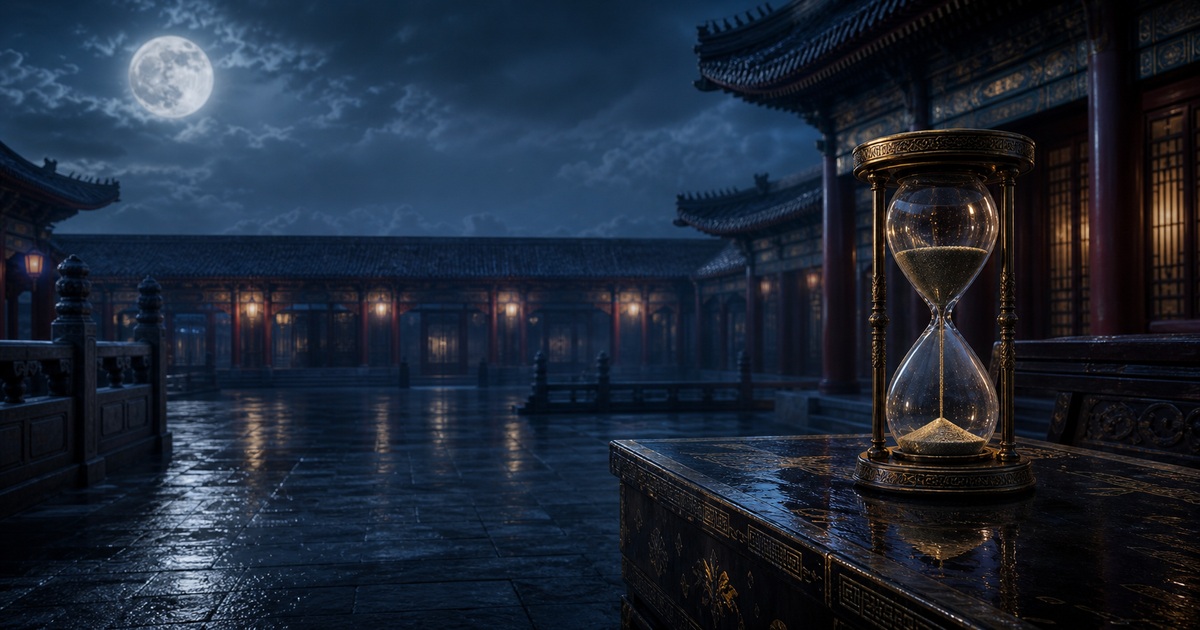
Romance has a clock. Two people meet, resist, fall, break, and find their way back, usually inside a single season of the heart. The Cloud Beside the Moon does not run on that clock. It runs on twenty years. When readers ask me why the book feels heavier than the love story it sometimes pretends to be, I point at the calendar. Twenty years is not how long it takes to fall in love. It is how long it takes to wear something down to the bone. Ruan Yueying does not spend two decades waiting to be loved correctly. She spends them on something colder, more patient, and far harder to undo. This is a book about what time does to a wound that is never allowed to close.
Light-to-medium spoilers follow for The Cloud Beside the Moon — the shape of Yueying’s revenge and the emotional weight of its ending. I will not quote her final words.
Twenty years is the wrong clock for love
Most love stories survive by compressing time. The genre wants heat: a meeting, a misunderstanding, a reconciliation, a vow, all close enough together that feeling never has to cool. Even the slow burn is really a held breath. It promises release.
Twenty years releases nothing.
A revenge that takes that long is not a held breath. It is a slow exhale that never ends. It outlasts the heat of the original injury. It outlasts the season in which forgiveness might still have been possible. It outlasts the girl who first felt the wound and the man who first caused it. By the time the account is finally settled, the two people who began the story are no longer entirely there to finish it.
That is the first thing I want readers to understand before they open this book. The length is not a flaw in the pacing. The length is the argument. A wound that could close in a season would make a different novel, gentler and more willing to call itself a romance. Yueying’s wound is given twenty years precisely because the book refuses to pretend it could be kissed away.
This is why I keep saying the story is not about forgiveness. Forgiveness is a fast verb. Attrition is a slow one. The Cloud Beside the Moon is written almost entirely in the slow one.
What twenty years does to a person
Yueying enters the Eastern Palace as a Secondary Consort, not as the principal wife she had every reason to expect. The rank is the first cut. The wedding night is the second, deeper one. What matters here is not the wound itself but its half-life.
A wound carried that long does not stay a wound. It becomes a structure.
In the early chapters, Yueying’s anger still looks like grief searching for justice, and she has reasons any reader can honor. But revenge held for twenty years cannot remain a feeling, because feelings are not built to burn at full heat for that long. To survive the distance, the anger has to harden into something else: a plan, a habit, a way of reading every room, a discipline she practices the way other women practice embroidery or prayer.
The cost is that the discipline reshapes her. The girl who arrived wanting only distance and dignity learns to count debts, to wait, to use the same palace grammar that once injured her. She gains rank, authority, children, and the outward shape of a woman who has won. She also loses the ability to be touched without first measuring the angle of the hand reaching toward her.
That is what twenty years does. It does not return Yueying’s old self to her with interest. It hands her a victory and quietly bills her for the warmth it cost to get there. I wrote more about that kind of character in What Makes a Morally Grey Heroine Compelling?. Yueying is the sharpest case I have, because her greyness is not a costume she puts on. It is sediment. It is what two decades leave behind.
Why her last words still matter
If the book were a romance, the ending would arrive at the moment the two of them finally understand each other.
It does not.
Yueying’s last words are the hinge of the whole novel, and I will not quote them here, because the way they land depends on having lived the twenty years alongside her. But I can tell you what they are not. They are not a curse. They are not a tidy confession that ties the marriage into a bow. They are aimed at a man who spent two decades close enough to touch her and never once managed to hear her.
That is the cruelty the title’s softness hides. She gave it twenty years. He still did not understand.
This is why her final words matter more than any single act of revenge in the book. Revenge can take a man’s power, his comfort, his certainty. It cannot make him understand. After twenty years of plotting, the one thing Yueying most wanted — to be seen clearly by the person who wronged her — is the one thing her revenge was never able to buy. The ending does not reward her with his comprehension. It confirms its absence.
A reader hoping for forgiveness will keep waiting for the scene where the two of them meet in the middle. The scene never comes. What arrives instead is quieter and far more devastating: proof that some distances are not closed by time, only measured by it.
A timescale no romance survives
So when people call The Cloud Beside the Moon a romance with a sad ending, I gently disagree. A sad romance still believes love was the point and tragedy interrupted it. This book believes something harder: that some lives are organized around a wound, and the wound becomes the spine the whole story hangs from. Love does appear in it, late and brief and by moonlight, but only as one of the lives Yueying was never allowed to live. I made that larger argument in Why Palace Romance Needs Tragedy, and Yueying may be its clearest proof.
The clock is the thing to watch. Twenty years is not a courtship. It is an attrition.
And it is not the only impossible clock in these books. In The Emperor’s Last Lie, Ye Changning answers her own catastrophe not with two decades of plotting but with seven years of vanishing — a disappearance into Anyuan Temple so complete it becomes its own kind of refusal. Where Yueying gave him twenty years of plotted revenge, Changning gave seven years of disappearance. Both are timescales no romance is supposed to survive.
What to do next
If you want to walk all twenty years yourself, start with The Cloud Beside the Moon. It is on Kindle and Kindle Unlimited.
If you would rather know what you are walking into first, the Reader’s Guide has content notes and reading order. And if you want the historical shadow behind Yueying’s particular kind of patience, read The Real Empresses Behind A-Jiao, Yueying, and Changning.
Twenty years is a long time to wait for an ending.
This one was never going to be a kiss.
— Tia
A free story for new readers
The Empress He Could Not Keep — a complete short story
of empire, obsession, and the impossible return.
Yours when you join the reader list.