Are My Books Dark Romance? Here's the Honest Answer.
Tia Shan explains where her palace tragedies overlap with dark romance—and where the label gives readers the wrong promise.
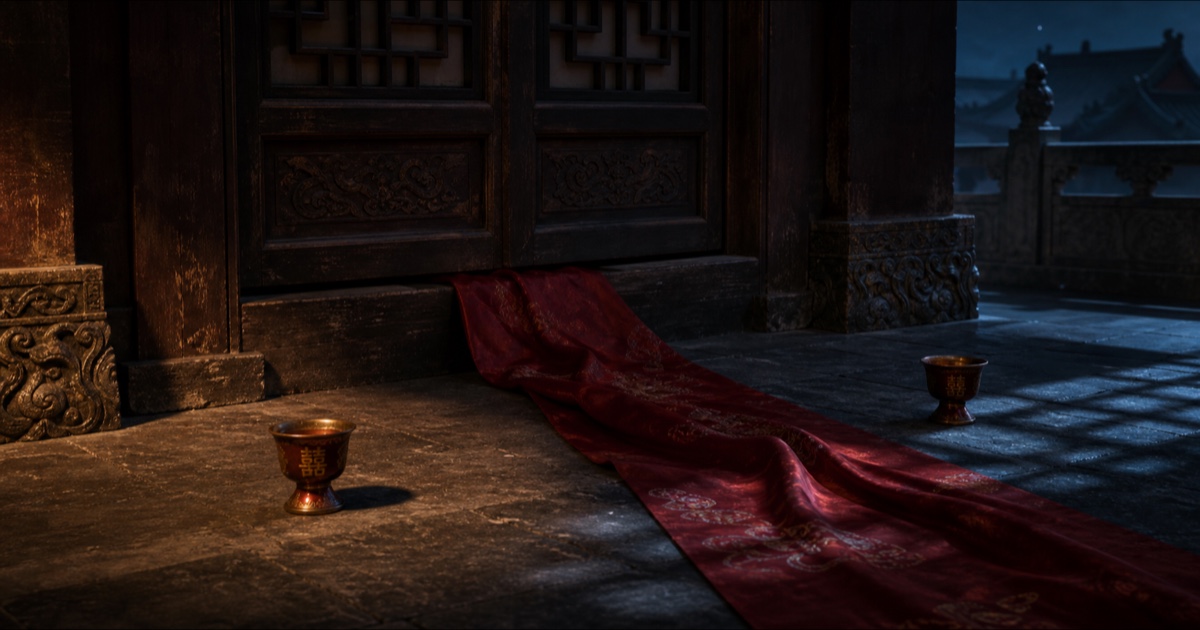
The label dark romance sits very close to my books. Close enough that I use it on the first book’s page, then worry that I have invited someone to the wrong dinner. There are forced marriages, possessive men, brutal power imbalances, jealousy, obsession, and love tangled up with harm. Those are familiar dark-romance ingredients. The trouble begins when we reach the ending—or the bedroom, or the question of whose emotional journey the book is built to protect. So here is the least slippery answer I can give: The Emperor’s Caged Bride comes closest. The Emperor’s Last Lie lives next door. The Cloud Beside the Moon has taken the carriage in the opposite direction and may be carrying a knife.
Spoiler level: light. I discuss premises, tone, heat level, and genre expectations, but none of the final reveals.
If dark romance means dangerous love, then yes
My books are full of love that is unsafe.
The men have institutional power over the women they desire. An Emperor does not enter a marriage as an ordinary husband. He controls rank, movement, fertility, servants, money, medical access, family punishment, and the official version of whatever happens behind a closed door. Even a tender gesture carries the weight of what he could do if tenderness ended.
The relationships also contain the emotional material many dark-romance readers enjoy: fixation, possessiveness, resentment that refuses to kill desire, coerced proximity, morally compromised choices, and the awful question of whether a person can love someone who has harmed her.
If that is what you mean by dark romance, the label fits.
I would not blink if a reader described the books that way. Someone searching for a soft courtship with witty banter should receive fair warning before opening one of mine. “Dark” does useful work there.
It tells you the wedding is not a safe shore.
If dark romance means a romance contract, then no
This is where I become cautious.
A genre romance usually promises that however extreme the journey becomes, the central relationship will reach an emotionally satisfying union. Dark romance can take a couple through violence, captivity, taboo, and revenge. The darkness changes the road. It does not necessarily cancel the destination.
My books do not guarantee that destination.
I write palace tragedies with romantic bones. Love may be sincere. A man may regret what he has done. A woman may desire him and still refuse the story that his desire tries to build around her. Tenderness may arrive. It does not retroactively make coercion tender.
The palace keeps its own accounts. A marriage can continue for decades without becoming a reward. A confession can be true and still arrive too late.
Readers who need the couple’s survival and union should know this before spending money on the books. I am not hiding a conventional romance ending under a severe cover.
The heat level is low; the harm is not
All three novels are closed-door and sit at about one out of five for heat. There are no explicit sex scenes. These books are interested in intimacy, but they are far more interested in what intimacy means when consent and rank do not meet on equal ground.
“Dark romance” is sometimes used as shorthand for high spice. Anyone arriving for elaborate erotic scenes will find very little of what they came for.
They will find sexual coercion, marital assault, pregnancy, reproductive pressure, jealousy, and the political consequences of who shares the ruler’s bed. Those subjects are serious even when the bedroom door closes. The Reader’s Guide gives book-by-book content notes and violence levels without making anyone hunt through reviews for them.
I would rather lose the wrong reader at the guide than ambush them halfway through a wedding night.
Book one: the closest fit
The Emperor’s Caged Bride is the easiest of the three to shelve beside dark romance.
A-Jiao enters a forced marriage to the Emperor after the death of his first wife, A-Shuo. She believes she has been chosen as a replacement and begins shaping herself around a dead woman’s memory. The Emperor is possessive, jealous, emotionally withholding, and capable of devastating cruelty. Their marriage holds desire, punishment, dependence, and a truth neither of them can speak cleanly.
The short book stays tightly focused on the couple: what kind of love can exist inside an unequal, damaged bond?
The story does not ask A-Jiao’s suffering to disappear because the Emperor’s feelings are real. Love explains some of his choices; it does not excuse them. The closing movement offers recognition, not a guaranteed romantic reward.
Choose this book if you want the most concentrated marriage story, the strongest possessive-Emperor energy, and a final ache that complicates everything before it. The Emperor’s Caged Bride is available on Kindle and Kindle Unlimited.
Book two: revenge has taken the central seat
The Cloud Beside the Moon contains a marriage, jealousy, desire, and a husband who cannot understand the wife beside him until the damage has settled into the foundations. Yet the couple is not the book’s governing promise.
Yueying’s real engine is grief. After her dearest friend dies, she turns the palace into a twenty-year campaign. Female friendship, revenge, motherhood, succession, and the corruption of a once-clear purpose carry more weight than the question of whether her marriage can heal.
There are moments when another book might turn toward reconciliation. Yueying keeps walking.
This is the least romance-shaped of the three. Readers who enjoy cold heroines, long strategy, moral decline, and palace warfare may love it. Readers waiting for the husband’s redemption to become the main event will probably feel the book resisting them. I wrote a fuller expectation guide in Why The Cloud Beside the Moon Is Not a Romance.
Read it as a revenge tragedy in a royal marriage, not a dark romance that happens to include revenge. Find it on Kindle and Kindle Unlimited.
Book three: a love story told through a locked archive
The Emperor’s Last Lie stands closer to romance again, but its structure is different.
Changning once loved Li Chengmu. Years of political catastrophe separate them. When she returns to the palace under another name, he is dying, she is furious, and both are living inside false versions of their shared past. The book follows old love, substitution, imperial obsession, buried witnesses, and a mystery whose answer could change the moral meaning of their separation.
The romance is central. So is the investigation.
Li Chengmu has the emotional profile that attracts many dark-romance readers: absolute power, ruthless patience, possessiveness, secrecy, and a willingness to make terrible decisions in the name of protection. Changning is never simply waiting for the hard man to reveal a soft center. She has her own dead, her own guilt, and her own account of what his love has cost.
I think of this one as a tragic palace romance and a mystery about mercy. If you want childhood lovers, a second-chance shape with no safety guarantee, and a man whose devotion may be indistinguishable from control, begin here. The Emperor’s Last Lie is on Kindle and Kindle Unlimited.
What I would put on the shelf label
If bookshelves allowed a full sentence, mine would read:
Chinese historical palace tragedy with dark-romance elements, closed-door intimacy, morally grey characters, and no guaranteed HEA.
It is not elegant marketing copy. It is accurate.
“Chinese historical romance” helps readers find the setting and relationship focus. “Palace intrigue” signals that private life is political. “Literary tragedy” explains why consequences stay on the page. “Dark-romance elements” names the obsession and coercive power without promising that the story will finally bless the couple.
No single label can carry an entire book. It can at least avoid lying about the door.
Come for the darkness; stay only if you want the aftermath
You may enjoy these books if your favourite part of dark romance is the moral discomfort: wanting two people near each other while knowing proximity may be the thing that ruins them. You may enjoy them if you like possessive rulers but still want the narrative to remember what possession costs. You may enjoy them if a confession makes you cry harder when it fails to repair the past.
You may want a different book if you need high heat, a safe fantasy framework, redemption through romantic love, or certainty that the central couple will end together. None of those preferences requires an apology. They are good reasons to choose carefully.
For a side-by-side starting point, open Three Books, Three Palaces. For spoiler-free content notes, heat, violence, and reading order, use the Reader’s Guide. The Complete Reader Companion gathers the character studies and ending essays for after you finish.
Are my books dark romance?
Close enough for the question to be fair. Not close enough for me to leave the answer at yes.
— Tia
A free story for new readers
The Empress He Could Not Keep — a complete short story
of empire, obsession, and the impossible return.
Yours when you join the reader list.