Complete Reader Companion to Tia Shan's Palace Tragedies
Where to start with Tia Shan's three palace tragedies: books, reading guides, characters, themes, symbols, and spoiler essays.
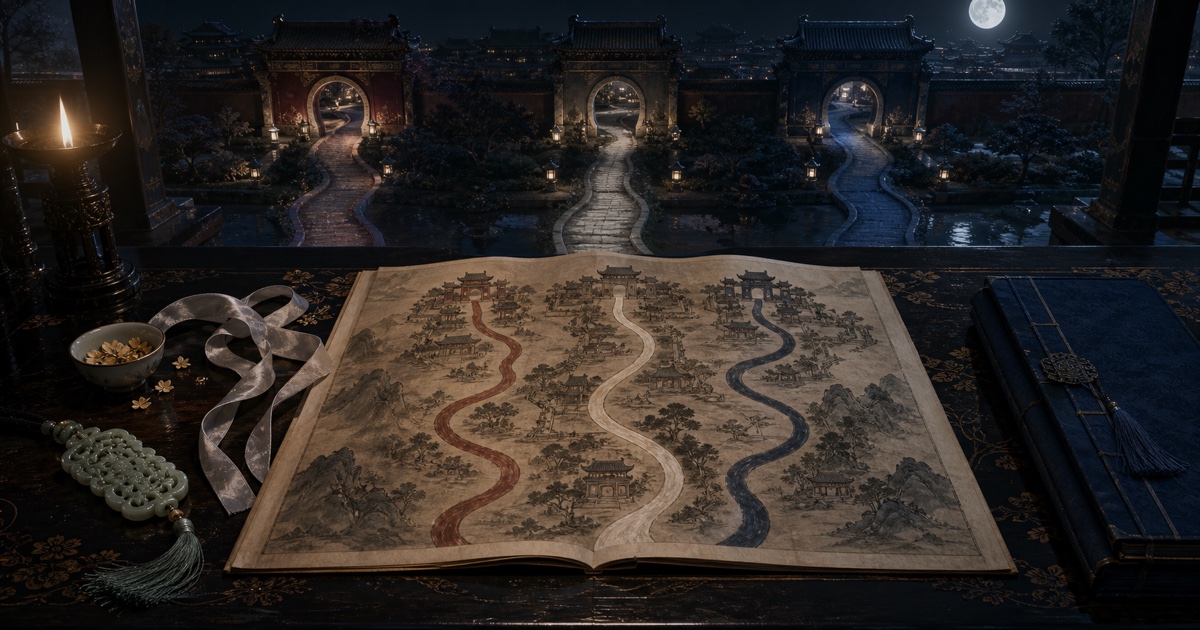
If you have just found my books, this is the page I would send you before I tried to explain three dynasties, three palaces, and three different kinds of heartbreak in a message. You do not need to read the novels in order. Each stands alone, and each asks a different question about what a woman can keep when family, marriage, rank, and imperial power all claim a part of her. This companion is a map rather than an assignment: choose the door that interests you, use the practical guides when a title or name slows you down, and return to the spoiler shelves only after you finish a book. There is no correct route through the palace. There is only the wound you want to follow first.
Choose your first door
- I want short, intimate heartbreak. Begin with The Emperor’s Caged Bride: a replacement bride, a dead first wife, forbidden first love, and a golden palace that becomes a cage. Read on Amazon / Kindle Unlimited.
- I want a long revenge story. Choose The Cloud Beside the Moon: twenty years of palace warfare, female friendship, moral compromise, and a heroine who discovers that winning does not leave clean hands. Read on Amazon / Kindle Unlimited.
- I want palace mystery and childhood lovers. Enter The Emperor’s Last Lie: a vanished woman, a dying Emperor, buried witnesses, forbidden love, and a truth withheld until it can no longer be merciful. Read on Amazon / Kindle Unlimited.
- I want to choose by trope. Use Chinese Historical Romance Tropes, Explained for replacement brides, revenge empresses, substitute consorts, possessive emperors, and palace mysteries.
- I want morally grey women. Start with What Makes a Morally Grey Heroine Compelling?.
- I want palace worldbuilding first. Open A Beginner’s Guide to Chinese Palace Angst and keep the Palace Titles Guide beside you.
- I just want the music. Listen your way in through The Music I Wrote These Books To.
If you would rather see all three premises side by side, read Three Books, Three Palaces. For content notes, tropes, heat levels, and reading-order questions, the full Reader’s Guide is the practical starting point.
Before you read: the spoiler-safe shelf
My courts are invented, but their pressures are historically informed. What Is an Imagined Dynasty? explains that choice; The Real Empresses Behind A-Jiao, Yueying, and Changning traces the historical echoes without turning the heroines into disguised biographies.
For the details you may want close at hand:
- How to Pronounce the Names in My Books gives English-friendly approximations for the major characters.
- Why Everyone Gets Renamed When the Emperor Dies explains Crown Princesses, Secondary Consorts, Empresses Dowager, accession, and the people who keep the palace running.
- A Glossary of Palace Objects, Places, and Symbols is the quick reference for crowns, wine, jade, letters, halls, and other recurring objects.
- The Real Costumes Behind My Imagined Dynasty follows the Han, Tang, and Northern Wei visual influences behind the invented courts.
- Why “No HEA” Can Still Be Worth Reading explains the emotional contract before you enter: these are tragedies, not romances with guaranteed happy endings.
- Are My Books Dark Romance? Here’s the Honest Answer. separates the dark-romance elements from the ending, heat, and redemption promises these books do not make.
- What Imperial Favor Buys—and Why It Never Makes a Palace Woman Safe follows the silk, physicians, promotions, scrutiny, and enemies that travel with an Emperor’s attention.
If you arrived through another story, there are three spoiler-light bridges: for readers of Ruyi’s Royal Love in the Palace, for readers of Memoirs of a Geisha, and for viewers of The Story of Ming Lan. They compare emotional architecture rather than claiming the works are interchangeable.
For a lighter author note with no ending reveals, The Palace Is Cruel. The Women Are Still Funny. follows A-Jiao’s temper, Wen Shuer’s mischief, Changning and Yinyuan’s bickering, and Consort Wan’s magnificently convenient illnesses.
Book one: The Emperor’s Caged Bride
Read first, with light premise spoilers:
- Cui Jiao Character Study — The Girl Beneath the Phoenix Crown follows the impulsive girl beneath A-Jiao’s obedience.
- The First Wife Who Was Already Dead reads A-Shuo as the absence that still arranges every room.
- Why Weiyang Palace Is a Golden Cage looks at one palace as rank, home, theater, and prison.
After finishing — heavy spoilers:
- The Emperor — Love, Possession, and Ruin asks why love cannot redeem violence.
- The Final Twist, Explained names the reveal and rereads the novel through it.
- Why the Ending Is Bittersweet, Not Romantic Redemption separates tenderness from acquittal.
- The Meaning of “Brother-in-law” follows one taboo address from the first wound to the final collapse.
Book two: The Cloud Beside the Moon
Read first, with light premise spoilers:
- The Meaning of the Moon and Cloud opens the title’s promise, the heroine’s name, and the image of a cloud beside the moon.
- Why The Cloud Beside the Moon Is Not a Romance explains why marriage is the setting while trauma and revenge are the true spine.
After finishing — major plot and character spoilers:
- Twenty Years of Revenge examines the novel’s long clock and why forgiveness is not its destination.
- Hu Mianmian — The Girl Who Loved Too Brightly follows the sincerity that becomes the story’s first great wound.
- Ruan Yueying — Pride, Revenge, and the Price of Staying Clean studies what Yueying protects, wins, and loses.
- Qin Yunnong — Villain, Survivor, or Both? keeps explanation and acquittal deliberately separate.
Book three: The Emperor’s Last Lie
The premise itself contains buried identities, a destroyed clan, a former Crown Princess, and a woman returned from seven temple years. If mystery is part of your pleasure, read the novel before opening the essays below.
After finishing — heavy spoilers through the ending:
- Ye Changning — The Woman Who Survived by Disappearing reads her buried name, temple years, return, and difficult survival.
- Consort Wan and the Fine Art of Being Too Ill to Matter follows the grief beneath her sickbed disguise, the cinnabar handkerchief, and the moment the fake blood becomes real.
- The Last Lie — Why Some Tragedies Disguise Themselves as Mercy is the full close-reading of Li Chengmu’s silence, Changning’s hatred, and the truth he carries alone.
Across all three palaces
These essays are the corridors between the books. Most discuss outcomes or late character choices, so treat this entire section as spoiler territory for all three novels.
- Substitution as Survival follows women forced to live inside another woman’s name, place, or official story.
- The Wedding Night Wound compares two unequal forms of trauma in The Cloud Beside the Moon and The Emperor’s Last Lie.
- Children, Succession, and the Mothers Who Pay the Price reads royal children as heirs, shields, debts, and measures of who may be called Mother.
- Female Friendship as Palace Warfare traces tenderness, leverage, betrayal, and quiet protection among women.
- The People Who Remember follows the maids, eunuchs, and physicians who preserve truths the official palace record is designed to erase.
- The Osmanthus Wine, the Swing, and the Jade Pendant follows one object through each tragedy and asks what memory can hold when people cannot speak freely.
- Why Palace Romance Needs Tragedy sets out the architecture beneath all three books: love, family, freedom, and power cannot all win in the same room.
Your route can stay unfinished
You do not have to read every essay, and you do not have to turn the books into homework. This page exists so that when a name slips, a title changes, or an ending keeps hurting after you close the book, there is somewhere to return.
Start with the Reader’s Guide if you want reassurance and content notes. Browse all three books if you already know which kind of tragedy you want. Or read Letters from the Inner Palace if you would like a free, shorter encounter with this world before entering a full novel.
The doors do not form a sequence. Choose one, and enter when you are ready.
— Tia
A free story for new readers
The Empress He Could Not Keep — a complete short story
of empire, obsession, and the impossible return.
Yours when you join the reader list.