Hu Mianmian — The Girl Who Loved Too Brightly
A character study of Hu Mianmian, whose sincere love becomes the first great wound in The Cloud Beside the Moon.
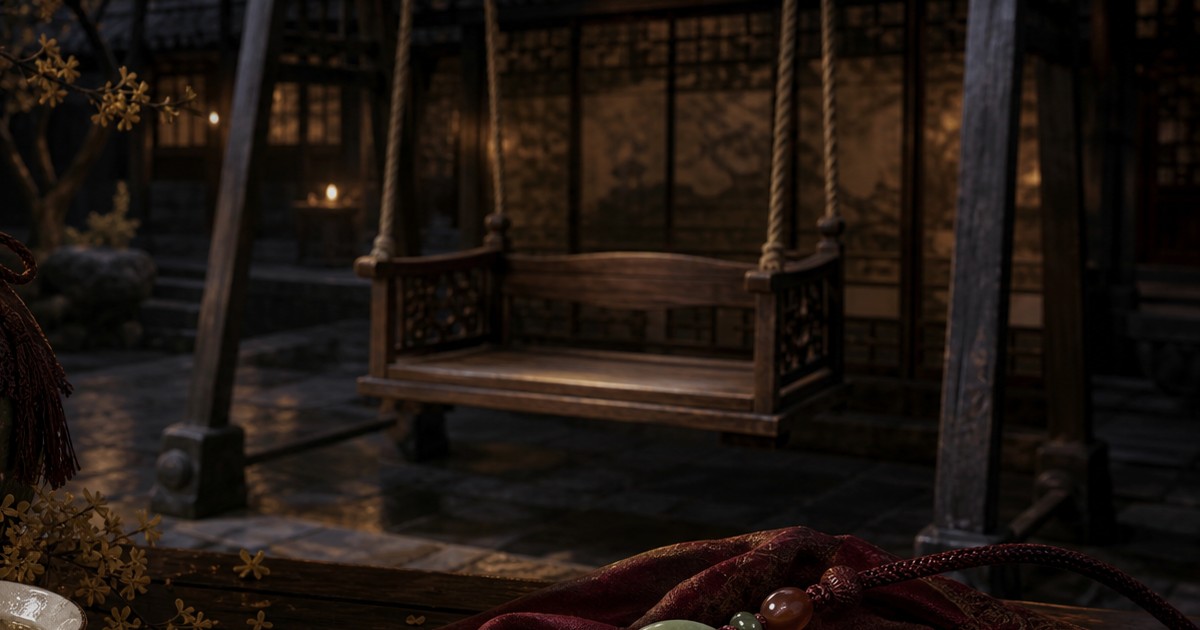
I have a soft spot for characters who look simple from a distance and become devastating only after you realize the story has been unfair to them on purpose. Hu Mianmian is one of those characters. At first, she seems almost comic: the girl who sighs over the Crown Prince’s face, complains too loudly, cries too easily, and turns every conversation back toward the man she loves. But in The Cloud Beside the Moon, sincerity is not a weakness because it is foolish. It is dangerous because it has no armor. Mianmian loves too brightly for a palace that survives by dimming people, and by the time Yueying understands the cost of that brightness, the whole book has already changed shape around her absence.
Light-to-medium spoilers follow for The Cloud Beside the Moon. This article discusses Mianmian’s death, which is established early and becomes one of the novel’s central wounds. I avoid Yueying’s final ending.
She Is Not a Joke About Lovesickness
Mianmian enters the Eastern Palace at sixteen, the same age as Ruan Yueying. They arrive inside a household already organized around a painful imbalance: the Crown Prince loves Qin Yunnong, Qin Yunnong is the principal wife, Yueying has been made a Secondary Consort, and Mianmian is another young woman asked to build a life around a husband who may never really turn toward her.
From Yueying’s point of view, Mianmian is noisy, dramatic, and impossible not to love. She is the one real friend Yueying has in the Eastern Palace. She brings gossip, jealousy, pastries, concern, and a kind of emotional warmth Yueying does not know how to ask for directly.
It would be easy to laugh at her. Yueying often does.
But the novel slowly teaches Yueying, and the reader, that laughter has limits. Mianmian’s love is not shallow simply because it is obvious. She has given her heart completely to someone who cannot return it, inside a system where she cannot leave, cannot choose another life, and cannot even grieve the lack without sounding improper.
That is not a silly crush.
That is captivity with a tender face.
The Palace Makes Love Competitive
In an ordinary love story, unreturned affection hurts because one person does not love another back. In a palace story, that hurt becomes political.
Mianmian does not suffer in private. Her longing has witnesses: maids, physicians, Yueying, Yunnong, the Crown Prince, the household itself. A visit from the Crown Prince is not only a visit. It is a public sign of favor. The palace turns ordinary romantic pain into evidence.
This is why Mianmian’s brightness matters. She has almost no instinct for concealment. Other women learn to fold desire into ritual, illness, household management, prayer, or strategy. Mianmian remains heartbreakingly direct. She wants the Crown Prince to come. She wants him to look at her. She wants her friend to understand why seeing another woman loved hurts so much.
That openness is exactly what makes her vulnerable.
In Female Friendship as Palace Warfare, I wrote about how kindness can become leverage in a palace. Mianmian approaches friendship as warmth. Yunnong understands that warmth can be timed, fed, and sharpened until it cuts the person holding it.
The Cruelty of Almost
There is a scene I think of as the hinge of Mianmian’s character. Yueying, frightened by how dim Mianmian has become, asks the Crown Prince to visit her. He does. For several nights, he stays with Mianmian, and her illness lifts almost at once.
If this were a kinder book, that might be the cure.
Instead, it becomes the clarification.
Mianmian realizes that the Crown Prince’s physical presence is not the same as his heart. Yueying can ask him to come. Yueying cannot ask him to love. That difference is the wound Mianmian had not been able to name before, and once named, it cannot be unnamed.
This is the cruelty of almost. The palace does not simply deny Mianmian everything. It gives her enough to make the lack clearer: a glance, a visit, a few nights, the possibility of being remembered. Each small mercy proves that the central thing she wants remains beyond reach.
That is why I resist reducing her to “the girl who died of lovesickness.” Lovesickness sounds decorative, almost antique. Mianmian is worn down by a structure that keeps staging the beloved just out of reach, then calling her unreasonable for bleeding.
Yunnong’s Soft Blade
Qin Yunnong’s cruelty toward Mianmian is not loud. That is what makes it frightening.
She does not need to strike Mianmian, shout at her, or openly forbid her anything. She only has to understand the wound and press it at the right moments. She tells stories about the Crown Prince, lets Mianmian hear what she has missed, and arranges moments that look like care from the outside while deepening the illness inside.
That is a very palace kind of violence: plausible, elegant, deniable.
It is also why Yueying’s later revenge cannot be separated from guilt. Mianmian tried to protect Yueying from knowing too much because she understood, at the end, what hatred could do to her friend. That final tenderness is almost unbearable. The person most wronged is still thinking about the person who will be left behind.
The tragedy is that Mianmian is right to worry.
After she dies, Yueying begins the long moral descent I wrote about in Twenty Years of Revenge. Mianmian becomes the reason Yueying stops pretending she can remain clean. But a reason is not the same thing as permission. The book keeps asking whether revenge done for the dead can still stain the living.
Why She Haunts the Whole Novel
Mianmian’s death happens early enough that new readers might think she is only the inciting wound.
She is more than that.
She is the measure Yueying keeps failing and trying not to fail. She is the friend whose innocence Yueying did not protect. She is the cloud in the title image, the promise of love watching from beyond reach. She is also proof that in this book, the palace does not only destroy the ambitious. It destroys the sincere.
That matters because The Cloud Beside the Moon is not a simple revenge fantasy. Yueying’s anger begins in loyalty, and that loyalty is real. But the memory of Mianmian does not keep Yueying pure. The friend who loved too brightly becomes both lantern and accusation: look what was lost, and look what losing her made possible.
I return to the swing whenever I think about her. Mianmian pushing Yueying higher in the courtyard is such a small image, almost too ordinary for a palace tragedy. But that is why it hurts. For one moment, they are not rivals, ranks, wombs, or political liabilities. They are two young women in a courtyard, trying to keep a little girlhood alive after the palace has already begun taking inventory.
By the end, the swing remembers what the women themselves cannot return to.
The Girl Who Loved Too Brightly
Mianmian loved the wrong person, perhaps. She loved without enough self-protection, certainly. But the book does not ask me to despise her for that.
If anything, it asks the opposite.
Mianmian’s love is not wise, but it is honest. In a palace full of performance, that honesty becomes rare. In a household where every woman is taught to measure herself against another woman’s favor, Mianmian keeps believing feeling should be shareable, understandable, even kind. She is wrong about the palace. She is not wrong about love.
That distinction matters.
To love too brightly is dangerous only in a world that punishes brightness. Mianmian’s tragedy is not that she failed to become harder. It is that everyone around her lived inside a structure where hardness looked like intelligence and softness looked disposable.
I do not think she was disposable.
I think she is the first person in the book who shows us exactly what the palace costs.
What to Do Next
If you want to read the novel Mianmian haunts, start with The Cloud Beside the Moon, available on Kindle and Kindle Unlimited.
If you need content notes before entering Yueying’s story, begin with the Reader’s Guide. For more context around the book’s emotional architecture, read Why The Cloud Beside the Moon Is Not a Romance or The Osmanthus Wine, the Swing, and the Jade Pendant.
And when you meet Mianmian, be gentle with her.
She is brighter than the palace deserves.
Tia
A free story for new readers
The Empress He Could Not Keep — a complete short story
of empire, obsession, and the impossible return.
Yours when you join the reader list.