The Wedding Night Wound — Trauma in The Cloud Beside the Moon and The Emperor's Last Lie
A careful reading of Yueying, Changning, and two unequal forms of trauma inside imperial marriage.
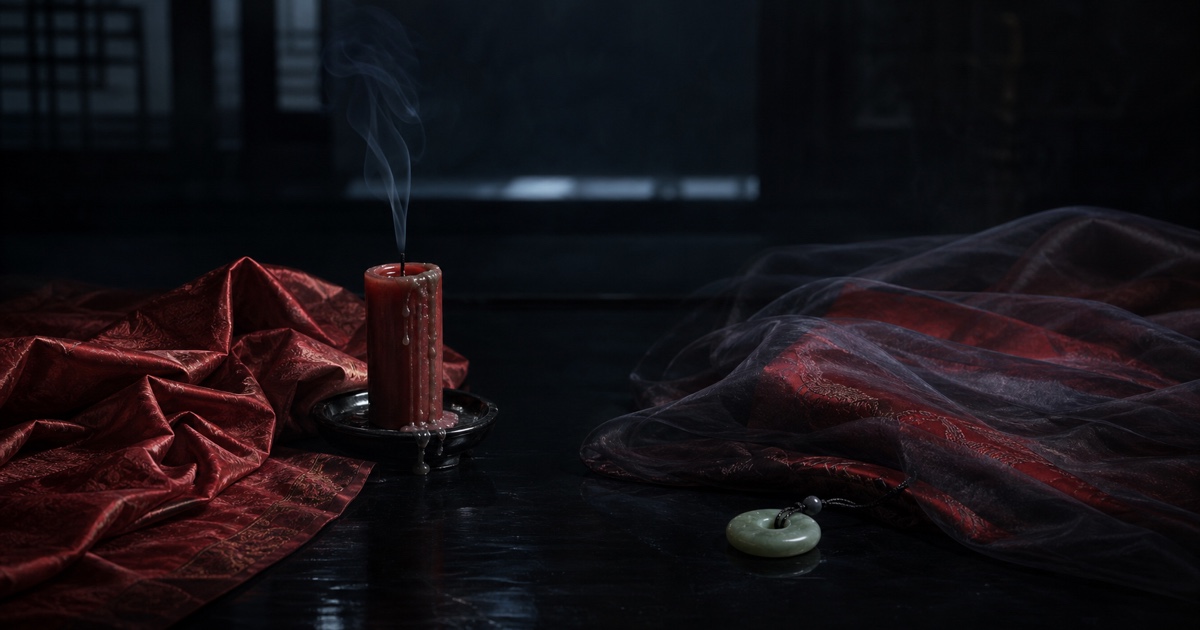
I have been reluctant to write about the wedding night in The Cloud Beside the Moon because pain can become spectacle very quickly. A scene written to expose power can be discussed as if its only purpose were shock. A heroine’s whole life can be reduced to the worst thing done to her. When I place Yueying beside Changning, I want to resist both habits. These women do not suffer the same act, and they do not carry harm in the same way. What connects them is the palace’s belief that an Emperor’s desire can decide where a woman lives, what her body means, and which name she must answer to. The difference between their stories matters as much as the echo.
Content and spoiler warning: This essay discusses marital rape and pregnancy resulting from it in The Cloud Beside the Moon, as well as forced concubinage, coercive control, family extermination, and grief in The Emperor’s Last Lie. The harm is named directly but not described graphically. It contains major spoilers for Yueying’s arc and light-to-medium spoilers for Changning’s. Please read the full content notes for The Cloud Beside the Moon and The Emperor’s Last Lie before continuing if you need them.
First, the necessary difference
Yueying is raped by Gu Ming on their wedding night. The novel leaves no moral ambiguity around that fact. He arrives drunk, ignores her attempt to leave, uses force, and wakes the next morning able to move through breakfast as though nothing irreversible has happened.
That is not what happens to Changning.
Li Chengmu forces a widowed Changning into his harem, but on her first night of service he does not assault her. They speak; he leaves before midnight; both sets of robes remain undisturbed. Later, the novel states that he respects the knot in her heart and that they do not consummate the relationship for months.
Precision here is part of writing about trauma responsibly. Forced concubinage is still coercion. An Emperor pointing at a woman and ordering her into the palace is not consent merely because he later shows restraint in a bedchamber. But unequal harms should not be made identical for a cleaner comparison. Yueying’s wound is a sexual assault. Changning’s wound is the imperial seizure of her life and identity after seven years spent trying to make both her own again.
Yueying: the wound everyone expects her to smooth over
Major spoilers for The Cloud Beside the Moon begin here.
Yueying’s first defense is silence. She cannot tell Mianmian what happened. She avoids Gu Ming, recoils from his touch, and lets the palace misread her coldness as pride. Even after she becomes pregnant with Chan’er, she refuses the logic that asks her to hate the child or forgive the father. Chan’er is beloved because she is Yueying’s daughter. The violence remains violence because it was done to Yueying. One truth does not cancel the other.
Gu Ming eventually apologizes, but his apology keeps bending toward his own relief. At first he thinks she is making too much of the night. Later, he wants forgiveness so their child can be recast as heaven’s will and their marriage can feel whole. Yueying gives him the sentence he has failed to understand: she is a living person; she feels pain and sorrow.
Her revenge does not begin from the wedding night alone. Mianmian’s death changes the direction of Yueying’s life. The revelation that Qin Yunnong deliberately stoked Mianmian’s lovesickness—and had also helped create the conditions of Yueying’s wedding-night assault—joins private injury to a larger pattern of manipulation. Grief gives the old wound a target.
That distinction matters. Revenge is not treatment. Becoming Empress does not cure Yueying. It gives her authority, children to protect, and the power to make Yunnong suffer, but the wound remains inside every performance of marital harmony. Years later, under moonlight, Yueying can glimpse the man Gu Ming might have been and feel one instant of love. She still refuses to let that instant rewrite what came first.
I explored that refusal more fully in Ruan Yueying’s character study. Here, its meaning is simple: later tenderness does not retroactively create consent.
Changning: the wound of being returned to someone else’s story
Light-to-medium spoilers for The Emperor’s Last Lie begin here.
Changning enters the palace at twenty-five, not sixteen. She has already been Crown Princess, widow, condemned daughter, survivor, and temple recluse. At Anyuan Temple she has spent seven years building a boundary around Tong Yuer, the name attached to her dead husband, ruined clan, and impossible first love.
Li Chengmu crosses that boundary with one command: send her into the palace.
The first night is quiet, but quiet does not make the arrangement free. By morning, the harem has begun interpreting Changning through the Emperor’s visit. When he leaves early, she becomes the older, previously married attendant who failed to please him. When he returns, she becomes the low-ranked favorite who must have some hidden advantage. When the palace notices her resemblance to the dead Imperial Noble Consort Lin, it supplies the most convenient answer of all: she is a substitute.
Changning refuses that definition before she understands the full truth. When the Emperor calls her Yuer, she insists on Ye Changning. The denial is not confusion. Tong Yuer was real, but that self belongs to a life whose destruction nearly killed her. Her new name is a border, and she decides who may cross it.
This is how Changning refuses to let coercion become her entire identity. She keeps her wit. She argues, questions, investigates, and sometimes steps directly on an Emperor’s shoe. She does not pretend his control is kindness simply because much of it is meant to protect her. Li Chengmu arranges her rank, household, public identity, and future motherhood without giving her the full truth. Love explains that control; it does not make the control disappear.
For more on the seven temple years and the name she built there, read Ye Changning — The Woman Who Survived by Disappearing.
Two women, two ways of carrying what power did
Yueying turns the wound outward. She learns the palace’s methods, uses them against Yunnong, and refuses the forgiveness Gu Ming wants. That vengeance keeps her moving, but it also stains the moral clarity she once guarded.
Changning refuses to let the forced return supply the final meaning of her life. She keeps separating herself from the roles the palace offers: dead Crown Princess, temple ghost, substitute consort, protected beloved. Her resistance is not a clean journey toward forgiveness. It is a demand to know what happened and to choose what the knowledge will mean.
Neither response is a lesson readers must imitate. Trauma does not owe us an inspirational survivor, a gentle victim, or a woman whose pain makes her morally pure. Yueying can be wounded and cruel. Changning can be protected and controlled. Gu Ming’s remorse can be real without earning absolution. Li Chengmu’s restraint can matter without turning forced concubinage into consent.
That is the line I most wanted this comparison to hold. Writing trauma without sensationalizing it means naming the harm, refusing false equivalence, and staying for the aftermath. It means allowing a woman to become more than the scene that hurt her without pretending the scene no longer matters.
What to Do Next
If you are deciding whether either book is right for you, begin with the Reader’s Guide and full content warnings. For the wider shape of Yueying’s story, continue with Why The Cloud Beside the Moon Is Not a Romance. For Changning’s struggle against the substitute role, read Substitution as Survival.
When you are ready, both novels are available on Kindle and Kindle Unlimited: The Cloud Beside the Moon and The Emperor’s Last Lie.
Read Yueying without asking her to forgive. Read Changning without mistaking restraint for freedom.
Let both women keep the right to name what happened to them.
Tia
A free story for new readers
The Empress He Could Not Keep — a complete short story
of empire, obsession, and the impossible return.
Yours when you join the reader list.