Ye Changning Character Study — The Woman Who Survived by Disappearing
How Ye Changning turns disappearance, a buried name, and seven temple years into a difficult form of survival.
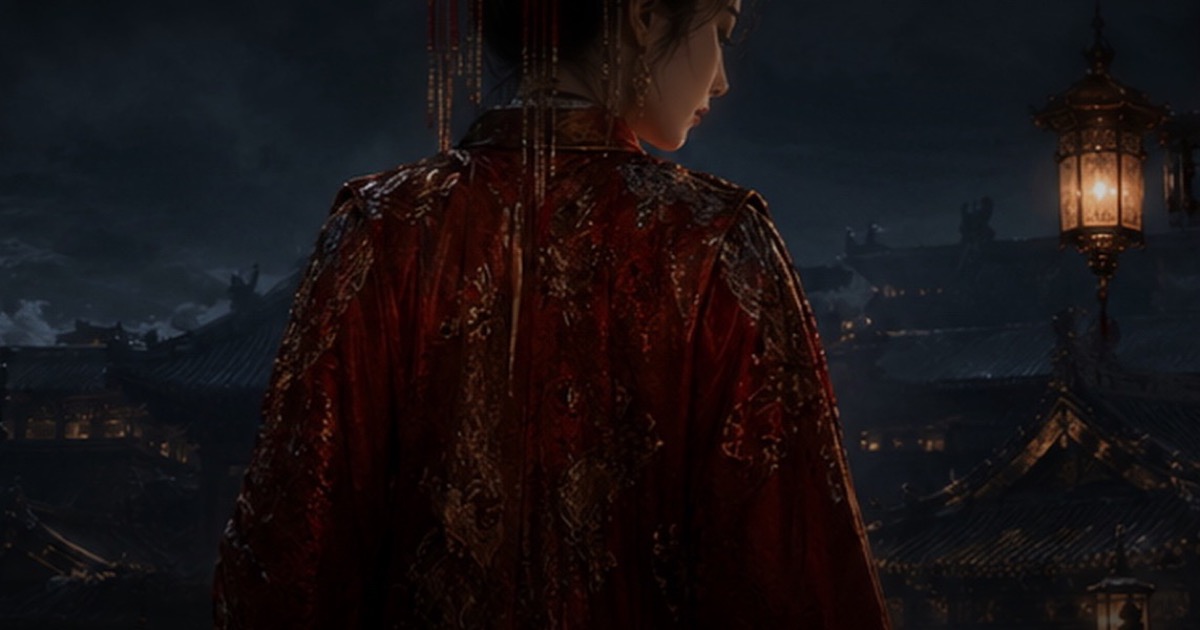
When I think about Ye Changning, I do not first think of the palace. I think of the road to Anyuan Temple and the bargain made at the foot of the mountain: seven years, no looking back, and a new name. A-Jiao in The Emperor’s Caged Bride survives by enduring the place assigned to her. Yueying in The Cloud Beside the Moon survives by learning to fight inside hers. Changning attempts something structurally different. She removes herself from the story. Her disappearance is not surrender. It is the only boundary she can still draw after history has crossed every other one.
Light-to-medium spoiler warning: This article discusses the fall of the Tong family, Changning’s years at Anyuan Temple, and her return to the palace. It acknowledges that Li Chengmu is protecting a final truth, but does not reveal that truth or the ending.
The woman left after a family is erased
Before she is Ye Changning, she is Tong Yuer: the daughter of Chief Protector Tong, wife of Crown Prince Li Chengyu, and the young woman Li Chengmu loved before politics made every private feeling dangerous.
Then the Crown Prince rebels.
The Tong clan is condemned for treason. Changning remembers her father dead, her husband captured, her infant nephew killed, and the Crown Prince’s household emptied by violence. She and her mother wait for judgment with poisoned wine before them. Changning drinks and expects to join the dead.
Instead, she wakes inside Li Chengmu’s carriage.
That survival is the first unbearable fact of her character. It is not victory. The man who saves her is also the prince whose forces defeated her husband and father. Gratitude, guilt, love, and hatred grow around one another like roots beneath a ruined wall.
Seven years is a boundary, not a cure
At the foot of Anyuan Temple, Li Chengmu asks Changning to forget. She tells him how long forgetting will require: seven years.
But the temple years do not heal Changning in the simple way palace stories sometimes use religious retreat. She listens to monks chant through the Ghost Festival because she is still frightened of ghosts. On the anniversary of Chengyu’s death, she writes letters to him and burns them. In one, she tries to pray that they will never meet in any future life, only to reverse herself and admit that a life containing both fate and deep love would still be beautiful.
Changning does not spend seven years becoming empty. She spends them containing what cannot be resolved. Prayer gives the pain ritual. Distance gives it walls. Anyuan Temple is safer than the palace, but she recognizes that it is not freedom. The freedom she wants is reconciliation with the restraints inside her own spirit.
Ye Changning is a name built for survival
At the temple road, Tong Yuer declares that Yuer no longer exists.
Li Chengmu once wished her lasting peace—changning. He gives her the surname Ye because it sounds like the word for night: a wish for long nights without fear, memory, or sleeplessness. The name becomes Ye Changning, a blessing neither of them manages to fulfill.
I love the cruelty inside that name. It is tender, but it is also an attempted burial.
Tong Yuer belongs to the Tong family, the dead Crown Prince, and the girl Li Chengmu could not marry. Ye Changning is supposed to be someone history cannot find. Yet the new name still comes partly from Li Chengmu. Even in disappearance, she cannot construct a self entirely outside the losses that made her.
This is why the name becomes so important when she returns to court. When the Emperor calls her Yuer, Changning answers with fierce precision: she is Ye Changning, the Second Attendant he brought from Anyuan Temple. The denial sounds strange because Yuer truly was once her name. But she is defending the border that kept her alive.
She is saying: you do not get to summon the dead girl merely because you miss her.
Returning as a substitute is a second erasure
Changning enters the palace at twenty-five as a previously married woman holding the near-bottom rank of Second Attendant. She once entered a Crown Prince’s household beneath miles of red bridal splendor. Now she stands at the end of the line.
The court quickly finds an explanation for the Emperor’s interest: Changning resembles the late Imperial Noble Consort Lin, whose childhood name was also said to be Yuer. To everyone watching, Changning is only another imitation offered to a grieving man.
That assumption is more devastating than the low rank.
Rank can change. The substitute story tries to erase the truth that Changning had a life with Li Chengmu before the palace knew either woman. It turns her history into resemblance and gives everyone a version of her that is easier to manage than the real one.
The palace is full of women used as replacements, but Changning understands the violence of substitution unusually well. She has already replaced herself once. She knows that a new name can preserve a body while leaving the old self buried beneath it.
She never truly lost her voice
It would be easy to describe Changning’s arc as the recovery of her voice. I do not think that is quite accurate.
Changning is sharp from the beginning. She jokes about her hopeless rank, argues with Yinyuan, snatches an unfinished edict, and tells Li Chengmu that if he prefers another consort, he can ask that woman to grind his ink. When anger overwhelms palace etiquette, she is entirely capable of stepping on a man’s boot—Emperor or guard.
Her voice survived.
What the seven temple years damaged was her belief that speaking could alter the shape of the truth. Silence had kept her hidden. The palace teaches her that silence also leaves other people free to write the story around her.
Her growth comes through questioning. She stops accepting the simple explanation of the dead favorite and tests every official account placed before her. Li Chengmu’s arrangements around her rank, safety, and future begin to look less like isolated acts of favor and more like one long design.
Protection without consent is still control. A lie intended to shelter someone can also deny her the right to understand her own life.
Changning’s voice returns not as softness, forgiveness, or romantic trust. It returns as the determination to know.
A-Jiao is confined, Yueying retaliates, Changning disappears
Across the three books, the heroines answer palace violence in different ways.
A-Jiao is trapped inside the most visible identity possible: Empress. The title keeps her at the center while Weiyang Palace becomes a literal prison.
Yueying remains in the palace and turns memory into strategy. Her revenge gives grief a target, but the campaign slowly stains the justice that began it.
Changning attempts absence. She takes another surname and lets the world believe Tong Yuer is gone. Yet disappearance carries its own cost. To become unreachable to history, she also becomes difficult to reach through love.
That is the emotional armor I wrote about in What Makes a Morally Grey Heroine Compelling?. Changning’s refusal protects her, but it leaves her vulnerable to discovering that someone has been speaking love through lies while she has been trained to hear only danger.
The final lie
As Changning investigates the palace, the story she has carried for seven years begins to fracture. Li Chengmu is ruthless. He manipulates people, moves women and children across a political board, and repeatedly decides what Changning should know. But the role of simple destroyer no longer explains everything he has done.
There is one truth he refuses to give her.
I will not name it here. The refusal forces Changning to confront a harder question: if hatred has kept her standing, what happens when its foundation becomes uncertain? Can she recognize protection without surrendering judgment?
Changning does not become visible again because an Emperor loves her. She becomes visible when she refuses every convenient version of herself: dead Crown Princess, temple ghost, substitute consort, protected woman, grateful survivor.
She survived first by disappearing.
The harder task is surviving what happens when she chooses to look directly at the life that remains.
What to Do Next
If you want to follow Changning from Anyuan Temple into the palace mystery, begin with The Emperor’s Last Lie, available on Kindle and Kindle Unlimited.
For content notes and reading order, use the Reader’s Guide. For a spoiler-light introduction to all three standalone tragedies, read Three Books, Three Palaces. You can also trace Changning’s jade pendant in The Osmanthus Wine, the Swing, and the Jade Pendant.
And when Changning insists on her name, listen carefully.
She is not denying who she was.
She is deciding who is allowed to call that woman back.
— Tia
A free story for new readers
The Empress He Could Not Keep — a complete short story
of empire, obsession, and the impossible return.
Yours when you join the reader list.