Consort Wan and the Fine Art of Being Too Ill to Matter
Consort Wan turns a ruined body, a silk handkerchief, and the palace's low expectations into one of The Emperor's Last Lie's best disguises.
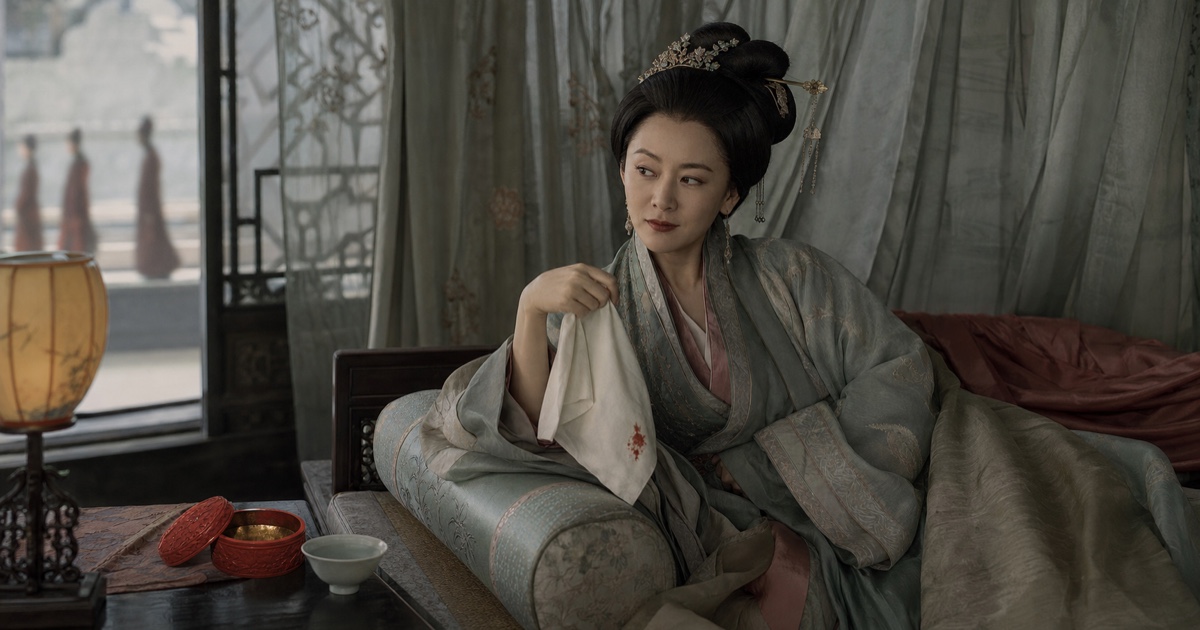
I gave Consort Wan one paragraph in my last essay and immediately knew it was not enough. A woman who keeps cinnabar ready for emergency fake haemoptysis deserves her own page. So does a woman who can run ten laps around a courtyard, lift two sacks of rice, and still persuade an entire palace that rolling over in bed may finish her off. Consort Wan is funny because she commits to the performance. She is painful because the performance began in real grief. By the end of The Emperor’s Last Lie, her silk handkerchief has carried both kinds of red. That small difference—pigment first, blood later—contains nearly her whole life.
Heavy spoiler warning: This character study discusses Consort Wan’s history, Princess Yuhuan, Changning’s children, and the final chapter of The Emperor’s Last Lie.
The safest woman is the one nobody bothers to fear
When Changning enters the palace, Consort Wan is already part of its furniture: high-ranking, well born, respected on paper, and absent from almost everything that looks like competition. She has no living child, no visible faction, no appetite for favour, and apparently no energy to make trouble.
In a harem, that combination reads as defeat.
Yinyuan says that if something can be done while lying down, Consort Wan considers even turning over a waste of half her life. Everyone accepts this. The women counting visits, pregnancies, and alliances have removed her from their arithmetic.
Then this famous invalid walks out of Noble Consort Yi’s sickroom, rolls her eyes at the performance inside, and asks Changning for a private word.
Her voice has none of the expected weakness. She has studied Noble Consort Yi, understood Changning’s resemblance to the dead Imperial Noble Consort Lin, and seen the danger before Changning does. The palace thinks she has opted out. She has been watching from the bed.
She was promised to the wrong future
Xiao Qiuyun was always meant to enter the imperial family. Her maternal clan had supplied old statesmen across three reigns. The groom in the original arrangement was Li Chengyu.
Then Chengyu’s rebellion collapsed. The Hou family helped destroy him. Li Chengmu took the throne. Qiuyun’s family had not joined the uprising, so the new Emperor preserved the marriage arrangement and brought her into his own palace. It reassured the old officials. Politically, it was tidy.
Nothing inside Qiuyun was tidy.
She had loved Chengyu and imagined a modest place in his household. Years later, her fantasy is painfully small: if only his hand had lifted her red veil; if only she had been allowed to die somewhere near him, even without sharing his grave. Instead, she married the man she believed had destroyed him.
Li Chengmu treated her gently, which made hatred harder. When they had a daughter, Qiuyun could not forgive the past, but the baby gave her a life that did not have to be organised around it.
For less than a year, Princess Yuhuan gave her that life.
The first illness was not an act
Yuhuan died after a charcoal brazier overturned in the nursery. Consort Wan held her through the child’s last three days, then refused to surrender the small body for burial. She sat in winter cold, dressed too lightly, while Li Chengmu held her. She stayed until her own body failed.
That is when her health broke.
I wanted this history to remain uncomfortable beside the later jokes. A clever woman who invented frailty from nothing would have been easier to write. Consort Wan starts with a body devastated by shock, exposure, and mourning. The palace never notices when she begins to recover.
Once a woman has been classified as weak, people stop checking whether the classification is still true.
Qiuyun quietly strengthens herself. By the time Changning knows her well, she exercises in private and keeps the old reputation because it has become useful. Real illness leaves her a disguise; discipline lets her live behind it.
Her sickbed becomes an alibi with pillows.
An invalid can hear a great deal
Consort Wan’s performance lowers every expectation. A woman who cannot reliably attend morning greetings is not asked to lead a faction. She can leave a crowded pavilion without explaining whom she dislikes. If she avoids the Emperor, nobody asks which dead man she still mourns.
She also knows exactly when to set the invalid aside.
After Changning secretly burns spirit money, Consort Wan supplies the Emperor with a safer story: the two women were making offerings for the late Empress Dowager. She accepts the punishment of copying sutras and gives Changning cover.
It looks like a clean rescue until Changning works out that Qiuyun leaked the paper-burning herself. She had used the incident to test whether Changning was connected to Imperial Noble Consort Lin’s death, informing Noble Consort Rong while warning the Emperor. Yinyuan nearly pays for that experiment with her life. Qiuyun does not apologise. She names the women who died because Li Chengmu kept searching for replacements for his lost Yuer and asks why their lives should count for less.
This is where I resist making her the comfortable wise friend. She protects Changning, but she first investigates her. She can be loyal and ruthless in the same afternoon. Grief has enlarged her sympathy in some directions and burned it away in others.
The handkerchief is funnier than a dagger
Later, when Taiping Pavilion becomes too crowded, Consort Wan reaches for her most dependable exit. She stains a silk handkerchief with cinnabar, coughs into it, announces that she is spitting blood and dying, then goes home to rest.
Nobody stops a woman who may be dying, or expects her to return tomorrow remembering every face in the room.
The trick reappears when Changning asks whether Qiuyun would raise her child if she died. Consort Wan produces another red handkerchief and declares that she has not even announced her own death yet. Changning snatches it away and mourns the innocent cinnabar. Their exchange is ridiculous and affectionate.
Changning knows about the courtyard laps and the rice sacks. Consort Wan no longer has to act frail for her. They can laugh at the public Qiuyun while preserving her for everyone else.
It is the kind of female friendship I like writing: not pure, not soft at every edge, and still capable of becoming shelter. I traced the wider pattern in Female Friendship as Palace Warfare.
She borrows a future from Changning
Qiuyun cannot bring Chengyu or Yuhuan back. What she can do is pour old love into the children who remain.
She promises to help with Changning’s son. When the boy grows to resemble Chengyu, she accepts it as a gift rather than another cruelty. Changning’s later daughter resembles Huan’er. Qiuyun and Li Chengmu begin quarrelling over who gets to hold the baby and who has enough strength. She even holds a horse stance to defeat the Emperor’s claim that she is too weak.
It is one of the warmest stretches in the book, and a dangerous one. The children are loved as themselves, but ghosts crowd close. Qiuyun survives by accepting these consoling fictions, and Changning chooses not to take them away.
Sometimes mercy in this book means telling the truth. Sometimes it means leaving one small illusion untouched.
The last stain is blood
At Li Chengmu’s funeral, Consort Wan holds the little princess by the hand. She has lost Chengyu, Yuhuan, and now the man she spent years failing to hate. She reaches for the familiar handkerchief and coughs.
This time, Changning knows the red is real.
The moment hurts because the book has trained us to smile at that prop. Cinnabar meant Consort Wan was in control. It meant she could end a conversation, escape a room, mock the palace’s appetite for drama, and return to her secret exercises. Real blood means the body has caught up with the role.
For years she survived by being too ill to matter. The palace had no interest in a woman who appeared to want nothing. Yet Qiuyun wanted ferociously: Chengyu alive, Yuhuan safe, Li Chengmu innocent enough to love, Changning protected, the children spared. The sickbed hid desire; it never cured it.
That is why I keep returning to her. Consort Wan turns uselessness into room to move, then uses that room to remember, scheme, protect, accuse, and love again. She is no secret mastermind floating above the damage. Her body keeps the bill.
If you have finished The Emperor’s Last Lie, continue with the Ye Changning character study or The Last Lie — Why Some Tragedies Disguise Themselves as Mercy. The Complete Reader Companion maps the rest of the spoiler essays.
If you have not entered this palace yet—and have somehow read past every warning—The Emperor’s Last Lie is on Kindle and Kindle Unlimited.
Keep an eye on the woman everyone has stopped watching.
— Tia
A free story for new readers
The Empress He Could Not Keep — a complete short story
of empire, obsession, and the impossible return.
Yours when you join the reader list.